REVIEW占位版 · 黄色 待核实 处替换工厂真实数据后上线 · 图片框为"待放图"(每个框写了要拍什么)· 公差表为行业通用值,机加工 ±0.01 / ±0.005 为工厂确认值 · 成本模拟为相对示意,不是报价 · 上线前删除本条

SMSheet metal · Dongguan, ChinaUP 90° R1

Sheet Metal Fabrication for Enclosures, Brackets & Chassis

Flat sheet in, finished part out — in our own sheet metal factory in Dongguan. We laser cut, bend, press in hardware, weld, machine the tight features, coat and assemble. Send a STEP file and an engineer checks your bends, holes and cost before we quote.

  • 2014Own sheet metal factory since
  • ±0.01mmMachined features, CMM-checked
  • 1 pcNo fixed minimum — prototypes are fine

A flat pattern is cut from 1.5 mm sheet

02What we build

Which Sheet Metal Enclosure, Box or Bracket Style Fits Your Product?

Most custom sheet metal parts fit one of eight styles: U-shape and L-shape enclosures, boxes with lids, 19-inch rackmount chassis, electrical cabinets, brackets, welded frames and stainless parts for food equipment. A U-shape enclosure is the low-cost choice when you need easy service access, and a rackmount chassis fits a standard 19-inch rack (1U = 44.45 mm). Most of these parts use 1.0–2.0 mm steel, stainless steel or aluminum 5052.

UP 90° R1COVER SLIDES ONCONNECTOR CUT-OUTS
U-01 Line drawing · not to scale

U-Shape Sheet Metal Enclosure

A U-shape enclosure is two U-shaped parts: the base carries the front and back panels, the cover slides over and screws on the sides. Easy to open for service and the cheapest enclosure to tool.

Used for
Control boxes, power supplies, test and lab instruments
Typical sheet
1.0–1.5 mm cold-rolled or galvanized steel, or aluminum 5052
Usual route

Laser cutBendPress-in hardwarePowder coat

CONNECTORS ON THIS SIDEBASE + BACK IN ONE PART
L-02 Line drawing · not to scale

L-Shape Enclosure

An L-shape enclosure is two L-shaped halves that close into a box. Both connector faces stay on one part, so cut-outs line up with the circuit board.

Used for
Boards with connectors on two opposite sides, slim desktop units
Typical sheet
1.0–1.5 mm steel or aluminum 5052
Usual route

Laser cutBendPress-in hardwarePowder coat

LASER-WELDED CORNERLID WITH DROP FLANGE
B-03 Line drawing · not to scale

Sheet Metal Box with Lid

A sheet metal box with lid is a five-sided box with welded or tabbed corners and a separate lid. Corners are laser welded and ground flat when the box must seal or look clean.

Used for
Junction boxes, battery boxes, sensor and gateway housings
Typical sheet
0.8–2.0 mm galvanized or stainless steel
Usual route

Laser cutBendWeldGrindPowder coat

19 IN RACK EARS1U = 44.45 MMSILK-SCREEN LABELS
R-04 Line drawing · not to scale

19-Inch Rackmount Chassis

A 19-inch rackmount chassis fits a standard rack (EIA-310): 1U is 44.45 mm tall, and the front ears carry the mounting slots. Front panels get silk-screen or laser-engraved labels.

Used for
Servers, network, audio and industrial controllers
Typical sheet
1.2–2.0 mm steel, front panel in 3.0 mm aluminum
Usual route

Laser cutBendPress-in hardwarePowder coatSilk-screen

RAIN LIPHINGEVENT LOUVERS
W-05 Line drawing · not to scale

Electrical Cabinet & Wall-Mount Box

An electrical cabinet has a welded body, a hinged door and a mounting plate inside. Rain lips and gasket channels are bent in; outdoor boxes are usually stainless or powder-coated galvanized steel.

Used for
Electrical panels, chargers, outdoor control boxes
Typical sheet
1.5–2.0 mm galvanized or stainless steel
Usual route

Laser cutBendWeldPress-in hardwarePowder coat

LZUHOLE ≥ 2.5T + R FROM BEND
K-06 Line drawing · not to scale

Sheet Metal Brackets (L, U, Z)

A sheet metal bracket has one to three bends and a few holes. Brackets are where small design rules matter most — hole-to-bend distance and flange length decide if a bracket bends cleanly.

Used for
Motor, sensor, PCB and wall mounts
Typical sheet
1.5–3.0 mm steel, stainless or aluminum
Usual route

Laser cutBendPress-in hardwareZinc plate

MACHINED PAD ±0.01BENT CHANNEL, WELDED
F-07 Line drawing · not to scale

Welded Frames & Chassis

A welded frame is made of bent channels welded together, then mounting faces machined flat on our CNC machines after welding, so motors and rails sit true.

Used for
Machine bases, carts, equipment frames
Typical sheet
2.0–3.0 mm bent channels, with machined mounting pads
Usual route

Laser cutBendWeldCNC machinePowder coat

WELDED, GROUND, BRUSHEDPERFORATED GRATE
S-08 Line drawing · not to scale

Stainless Parts for Coffee & Food Equipment

Stainless 304 food-equipment parts have seams that are laser welded, ground smooth and brushed to match, so there are no gaps for coffee or food to collect in. We also build hand coffee grinders as a complete OEM product.

Used for
Drip trays, stands, bases and shells
Typical sheet
0.8–1.5 mm stainless steel 304
Usual route

Laser cutBendWeldGrindBrush

03Shop route

How Does Sheet Metal Fabrication Work, From Laser Cutting to Welding?

Sheet metal fabrication at Dayao follows eight steps: laser cutting, deburring, press-brake bending, pressing in self-clinching hardware, welding, CNC machining of tight features, finishing, and assembly with inspection. Laser cutting needs no die, so a single prototype is practical. At each step the drawing must give clear facts — thickness in mm, bend direction, hardware size — so nothing is guessed.

OP10

Nesting & Laser Cutting

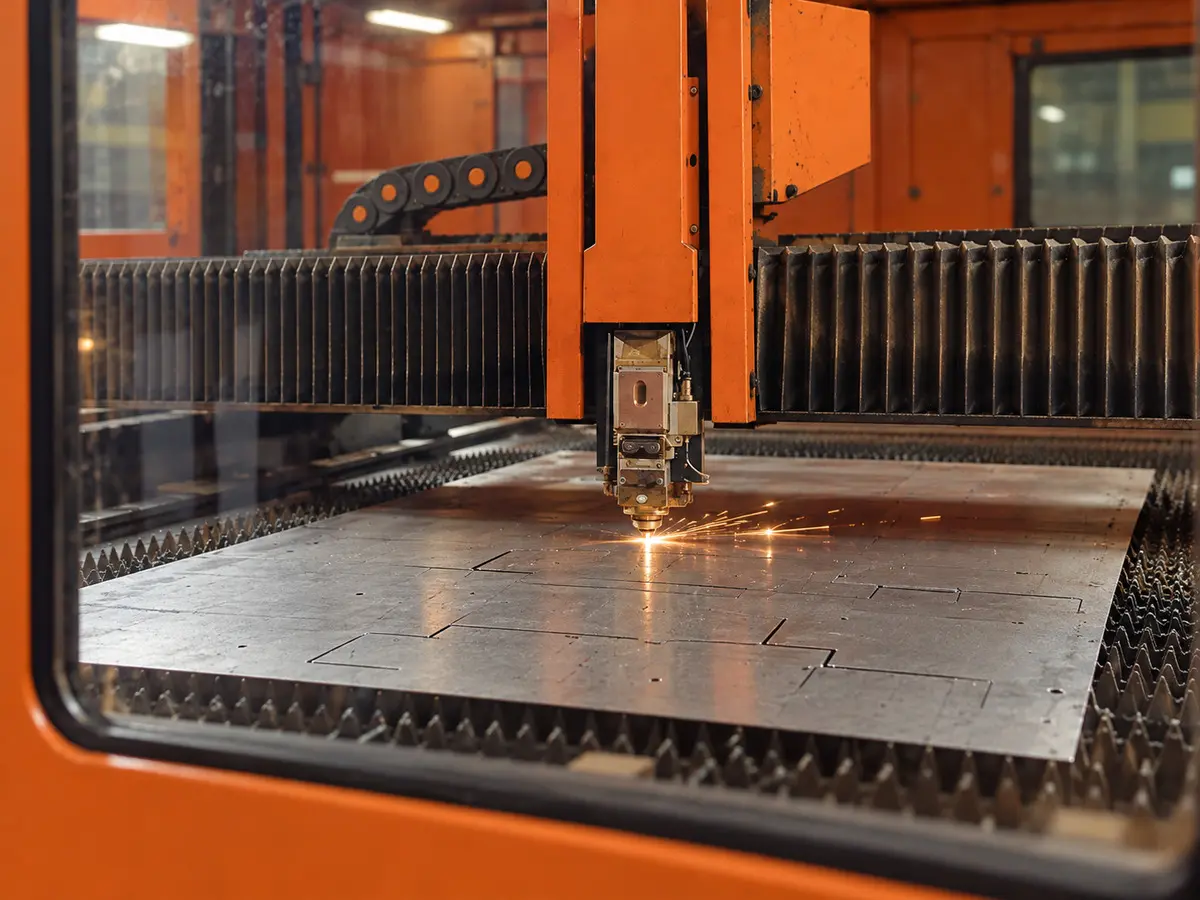
Laser cutting starts by nesting your flat patterns on a full sheet to waste as little metal as possible, then the laser cuts the outline, holes, slots and vents. No cutting tool to make, so a prototype costs the same to set up as a batch. Thickness limits, assist gas and DXF tips are on the laser cutting service page. 激光功率 / 最大幅面 / 最大切割厚度待核实

Your drawing should say

Material, thickness in mm, and which side is the “show” side.

OP20

Deburring & Graining

Deburring removes sharp edges and laser dross. If the part will be brushed, we set the grain direction now, before bending.

Your drawing should say

Grain direction if the part is brushed, and any edge that must stay sharp.

OP30

Press-Brake Bending

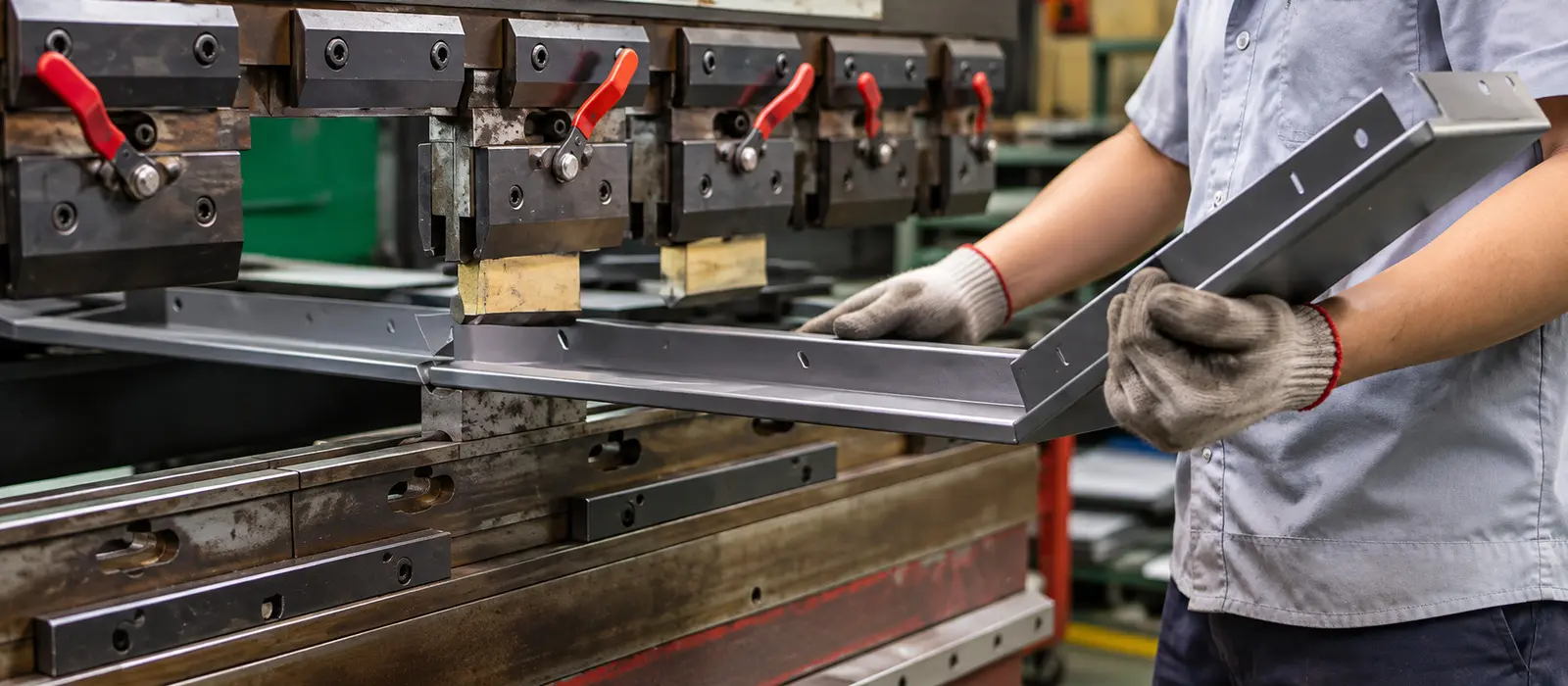
A press brake folds the part along straight bend lines. We plan the bend order so later bends do not hit earlier flanges, and check the first part’s angles before the batch.

Your drawing should say

Inside bend radius, bend direction (up / down) and the dimensions that matter most.

OP40

Self-Clinching Hardware

Self-clinching nuts, studs and standoffs (PEM-type) are pressed into the sheet so you get strong threads in thin metal without welding.

Your drawing should say

Hardware type and size, for example an M4 nut or an M3 × 8 stud, and which side it is pressed from.

OP50

Welding & Grinding

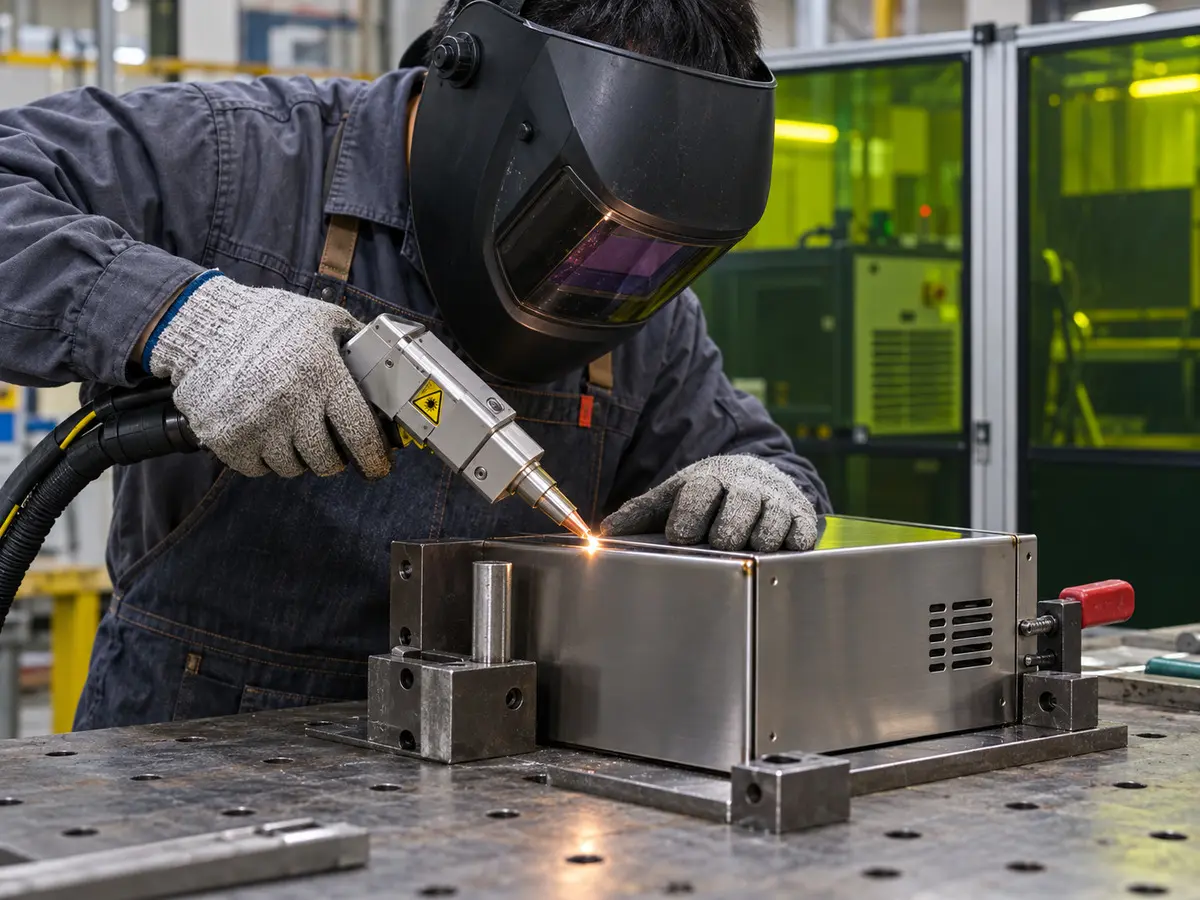
Welding at Dayao uses handheld laser welding, which joins corners and frames with thin seams and little heat distortion — good on stainless steel that will be seen. Seams are ground and blended. 氩弧焊 / 点焊是否也有待核实

Your drawing should say

Which seams are welded, full or stitch welds, and which welds must be ground flat.

OP60

CNC Machining of Features

Where a press brake cannot hold the fit — bearing bores, tapped holes, flat mounting pads — we machine the feature on our CNC machines after bending or welding.

Your drawing should say

The few tight dimensions. Machined features hold ±0.01 mm, and ±0.005 mm on critical features.

OP70

Finishing

Powder coating, spray painting, anodizing, plating, brushing, polishing and sand blasting, then silk-screen or laser-engraved labels and logos.

Your drawing should say

Finish and color (for example RAL 7035), and which threads and contact faces must be masked.

OP80

Assembly & Inspection

At assembly and inspection, parts are checked against your drawing with IPQC and OQC checks, assembled with your hardware or our machined parts, and packed so painted faces do not rub in transit.

Your drawing should say

Which dimensions are critical, and whether you need an inspection report with the shipment.

04Workbench

Sheet Metal Gauge Chart and Bend Calculator: Gauge to mm and K-Factor

A sheet metal gauge number means a different thickness in each metal: 16 gauge is 1.52 mm in steel (Manufacturers’ Standard Gauge), 1.59 mm in stainless steel and 1.29 mm in aluminum (Brown & Sharpe gauge). A higher gauge number means thinner sheet. For bends, use a K-factor of about 0.33 to 0.50 — lower for tight bends, and 0.50 when the inside radius is more than 3× the thickness.

Gauge to mm chart

Sheet metal gauge chart: gauge number to inches and millimeters for steel, galvanized steel, stainless steel and aluminum
GaugeSteelin / mmGalvanizedin / mmStainlessin / mmAluminumin / mm
74.550.1793″—4.760.1875″3.670.1443″
84.180.1644″4.270.1681″4.370.1719″3.260.1285″
93.800.1495″3.890.1532″3.970.1562″2.910.1144″
103.420.1345″3.510.1382″3.570.1406″2.590.1019″
113.040.1196″3.130.1233″3.170.1250″2.300.0907″
122.660.1046″2.750.1084″2.780.1094″2.050.0808″
132.280.0897″2.370.0934″2.380.0938″1.830.0720″
141.900.0747″1.990.0785″1.980.0781″1.630.0641″
151.710.0673″1.800.0710″1.790.0703″1.450.0571″
161.520.0598″1.610.0635″1.590.0625″1.290.0508″
171.370.0538″1.460.0575″1.430.0563″1.150.0453″
181.210.0478″1.310.0516″1.270.0500″1.020.0403″
191.060.0418″1.160.0456″1.110.0437″0.910.0359″
200.910.0359″1.010.0396″0.950.0375″0.810.0320″
210.840.0329″0.930.0366″0.870.0344″0.720.0285″
220.760.0299″0.850.0336″0.790.0312″0.640.0253″
230.680.0269″0.780.0306″0.710.0281″0.570.0226″
240.610.0239″0.700.0276″0.640.0250″0.510.0201″
250.530.0209″0.630.0247″0.560.0219″0.450.0179″
260.450.0179″0.550.0217″0.480.0187″0.400.0159″
280.380.0149″0.470.0187″0.400.0156″0.320.0126″
300.300.0120″0.400.0157″0.320.0125″0.250.0100″

Gauge numbers differ by metal: steel follows the Manufacturers’ Standard Gauge, galvanized steel the galvanized sheet gauge, stainless steel the U.S. Standard Gauge fractions (16 ga = 1/16 in) and aluminum the Brown & Sharpe gauge. In China, sheet is stocked in metric sizes — write mm on your drawing.

Source: Manufacturers’ Standard Gauge for sheet steel; galvanized sheet gauge; U.S. Standard Gauge (1893) for stainless sheet; Brown & Sharpe (AWG) gauge for aluminum. K-factor starting values from published press-brake guidance (Durma).

Bend allowance & K-factor calculator

Formula

Bend allowance BA = π/180 × A × (R + K × T). Bend deduction BD = 2 × (R + T) × tan(A/2) − BA. Flat length of an L-bracket = A + B − BD, using outside flange lengths.

05Drawing review

Sheet Metal Design Guide: Which Bend Radius, Flange and Hole Rules Matter?

Sheet metal parts bend cleanly when the inside bend radius is at least the sheet thickness (T), flanges are at least 4T long, holes are at least T wide and 2.5T + R from a bend, and bend reliefs are at least T wide. On 1.5 mm steel that means a radius and hole size of 1.5 mm or more and flanges of 6 mm or more. Harder alloys such as aluminum 6061-T6 need a larger radius.

  1. R ≥ T
    01

    Bend radius at least 1× thickness

    Inside radius ≥ T

    If ignored: Cracks on the outside of the bend

    An inside bend radius at least equal to the sheet thickness — for example R 1.5 mm on 1.5 mm steel — stops cracking, and one radius on every bend lets one press-brake tool form the whole part.

  2. ≥ 4T
    02

    Flange at least 4× thickness

    Flange ≥ 4T

    If ignored: Short flanges slip in the die and come out uneven

    A sheet metal flange must sit across the V-die opening, so keep every flange at least 4× thickness long — 6 mm or more on 1.5 mm sheet.

  3. 2.5T + R
    03

    Holes away from the bend

    Hole edge ≥ 2.5T + R from bend

    If ignored: Round holes stretch into ovals

    Metal near a bend line stretches, so keep hole edges at least 2.5T + R from the bend — about 5.3 mm on 1.5 mm sheet with R 1.5 mm — or cut them after bending.

  4. RELIEF
    04

    Add bend relief

    Relief width ≥ T, depth ≥ R + T

    If ignored: Tears at the end of the bend

    Where a bend stops inside the part, a bend relief cut at least T wide and R + T deep lets the metal fold without tearing the corner.

  5. T 3.0T 3.0Ø ≥ T
    05

    Holes at least as wide as the sheet

    Hole Ø ≥ T

    If ignored: Small holes come out rough or distorted

    Laser-cut holes smaller than the sheet thickness come out rough, so make holes at least 3 mm wide in 3 mm sheet, or ask for a drilled or machined hole.

  6. GAP ≈ T
    06

    Leave a gap at closed corners

    Corner gap ≈ T, or add corner relief

    If ignored: Flanges crash into each other

    Two flanges that meet at a closed corner need a gap of about one sheet thickness to fold; the gap can be welded closed afterwards if the box must seal.

  7. M4 NUT
    07

    Check hardware thickness and edge distance

    Follow the insert’s min. sheet and edge spec

    If ignored: Nuts pull out or bulge the edge

    Every self-clinching nut, stud or standoff has a minimum sheet thickness and edge distance in its maker’s catalog, so put the hardware part number on the drawing.

  8. THK 16 GATHK 1.5 mm
    08

    Give thickness in millimeters

    Thickness: 1.5 mm, not “16 ga”

    If ignored: Wrong sheet ordered

    16 gauge is 1.52 mm in steel but 1.29 mm in aluminum, and sheet in China is stocked in metric sizes, so write the thickness in millimeters.

Source: common press-brake design rules used across the sheet metal industry (inside radius ≥ T, flange ≥ 4T, hole Ø ≥ T, hole distance from a bend ≥ 2.5T + R, relief width ≥ T); Dayao engineering practice (2026).

06Tolerances

Sheet Metal Tolerances: How Accurate Are Cut, Bent and Machined Features?

Sheet metal tolerances get looser with every bend. Published shop guidelines list about ±0.13 mm between laser-cut features on one flat face, ±0.25–0.38 mm across one bend, ±0.76 mm across two or more bends and ±1° on bend angles. When a drawing gives no tolerance, ISO 2768-m allows ±0.3 mm on 30–120 mm. Features that must fit exactly are machined after bending, to ±0.01 mm at Dayao.

±0.13±0.25–0.38±0.7690° ±1°Ø8 ±0.01MACHINED · CMMBENT: EACH BEND ADDS VARIATION → MACHINE WHAT MUST FIT
Z-bracket, side view · hover a row to see where it applies
FeatureTypical toleranceNote
Laser-cut features on one flat face (hole to hole, edge to hole)about ±0.13 mm (±0.005 in)Typical published value; laser-cut features hold best — see laser cutting tolerances
Dimension across one bend (bend to edge or hole)about ±0.25–0.38 mm (±0.010–0.015 in)Each bend adds a little variation
Dimension across two or more bendsabout ±0.76 mm (±0.030 in)Keep critical holes on one flat face
Bend angle on a press-brake partabout ±1°The first part’s angles are checked before the batch
Machined features on a sheet metal part at Dayao±0.01 mm · ±0.005 mm criticalDayao CNC standard, checked on a CMM
Rule of thumb

Put holes that must line up on one flat face. If two features across a bend must match within ±0.1 mm or better, ask us to machine them after bending — on our CNC machines they hold ±0.01 mm.

Cut and bent values are typical published figures, not a guarantee for every part. 我方钣金公差标准待核实

Source: typical industry figures for laser-cut and press-brake parts (one surface ±0.005 in / ±0.13 mm, across one bend ±0.010–0.015 in / ±0.25–0.38 mm, across two or more bends ±0.030 in / ±0.76 mm, bend angle ±1°), not a Dayao guarantee; ISO 2768-1:1989 class m; Dayao factory data (2026) for machined features.

07Cost

What Decides Sheet Metal Fabrication Cost?

Sheet metal fabrication cost is set by five factors: material and thickness, cutting length and number of bends, pressed-in hardware and welding, the finish, and the quantity. Stainless steel usually costs more than mild steel, and welding plus grinding is often the most labor-heavy step. Laser cutting needs no tooling, so it suits prototypes and small batches; stamping needs a die but lowers the price per part at high, steady volume.

  1. 1

    Material & thickness

    Stainless steel costs more than mild steel and cuts more slowly, and thicker sheet cuts and bends more slowly than thin sheet.

  2. 2

    Cutting, bends & setups

    Laser cutting cost follows cut length and hole count, and bending cost follows the number of bends; each different bend radius or angle can mean another tool setup.

  3. 3

    Hardware & welding

    Each pressed-in nut or stud adds a step per piece, and welding plus grinding is usually the most labor-heavy step in sheet metal work.

  4. 4

    Finish

    Powder coating, plating or brushing adds a separate process, and masking threads and contact faces before finishing adds more labor.

  5. 5

    Quantity & tooling

    Setup cost is shared across the batch; laser cutting needs no tooling, while a stamping die costs money up front but lowers the price per part.

Do fabricators charge by the hour?

Shops estimate internally by machine time, but you get a price per part for your quantity. Our quotes list one-off costs, such as a stamping die, on a separate line.

Cost structure simulator

Relative · not a quote
Material
Thickness
Welding
Finish
Quantity

Illustration of how a typical sheet metal shop builds a price, for a medium-size part. 1.0× = 1.5 mm steel, 2 bends, no hardware, no finish, 100 pcs. Your quote is itemized for your real part.

Laser Cutting vs Stamping: When Does a Die Pay Off?

Laser cutting and bending need no tooling, so the price per part stays almost flat. Stamping — including progressive die stamping, where one die punches, forms and cuts the part in a row of stations — needs a die up front, then each part costs much less. The more parts you order per year, the sooner the die pays for itself.

  • Stay with laser + bending for prototypes, small batches and designs that still change.
  • Move to stamping when the design is frozen and the yearly volume is high and steady.

We quote both routes when your volume is near the switch point. 是否自制冲压模具待核实

Laser + bendingStamping (die cost spread over the order)
Cost per part vs order quantity — shape only, no prices. The switch point depends on part size and die cost.

Source: Dayao quoting practice, factory data (2026). The simulator and chart show relative cost shares for illustration only — they are not prices or quotes.

08Capabilities

Sheet Metal Fabrication Capabilities: What Can Dayao’s Factory Make?

Dayao’s sheet metal factory in Chang’an, Dongguan has made custom parts since 2014. It handles laser cutting, press-brake bending, stamping, welding, self-clinching hardware, CNC machining of tight features (±0.01 mm standard, ±0.005 mm critical), surface finishing and assembly. There is no fixed minimum order, so a single prototype is fine. Common sheet materials are cold-rolled, galvanized and stainless steel, aluminum, copper and brass.

FactoryOwn sheet metal factory, Chang’an, Dongguan, China — since 2014
CuttingLaser cutting · 激光功率 / 最大幅面待核实
Sheet thickness可加工板厚范围待核实
BendingPress-brake bending · 折弯机吨位 / 最大折弯长度待核实
StampingPunch presses for repeat parts · 冲床吨位 / 是否自制级进模待核实
WeldingHandheld laser welding · 其他焊接方式待核实
Machined features±0.01 mm standard · ±0.005 mm critical · CMM inspection
HardwareSelf-clinching nuts, studs and standoffs pressed in
FinishingPowder / spray coat, anodize, plate, brush, polish, sand blast, silk-screen, laser engrave
MaterialsCold-rolled, galvanized and stainless steel, aluminum, copper, brass
QuantityNo fixed minimum — one prototype to repeat production · lead time confirmed per quote
Need fully machined parts too? See our CNC machining services. Choosing a metal? Each one is compared in the materials guide:

Press brake bending a sheet metal part待放图车间实拍:折弯机正在折一个外壳件(能看到上下模)
Fiber laser cutting a steel sheet待放图激光切割机切板,带火花
Handheld laser welding a stainless steel box待放图手持激光焊不锈钢箱体
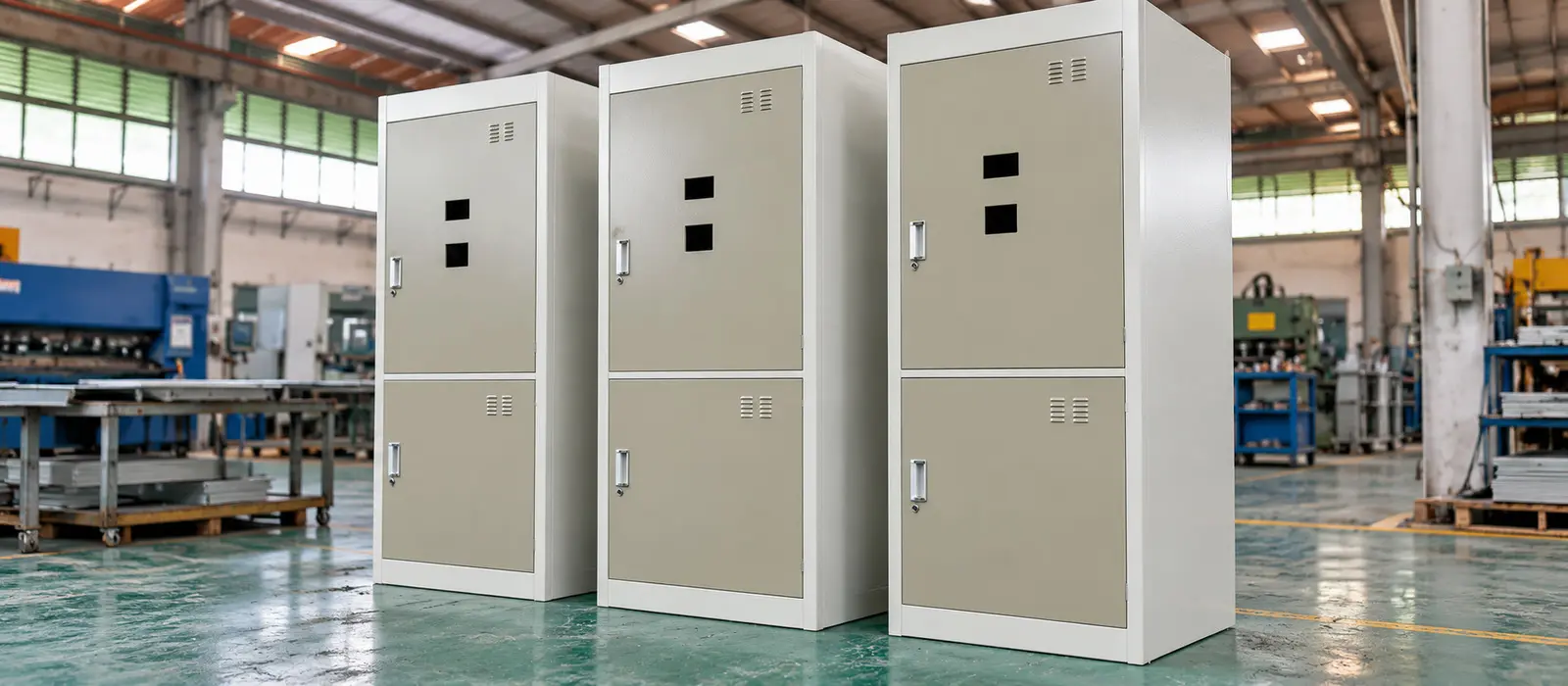
Powder coated sheet metal cabinets待放图一排喷好粉的成品机箱 / 机柜

09FAQ

Sheet Metal Fabrication FAQ

These answers cover what buyers ask most about sheet metal fabrication at Dayao. There is no fixed minimum order, prices are quoted per part after an engineer reviews the drawing, sheet thickness should be given in millimeters, and the K-factor is usually 0.33–0.50. An NDA can be signed before you share files, and the lead time is confirmed in each quote.

Q.01

What is sheet metal fabrication?

Sheet metal fabrication turns flat metal sheet into parts by cutting, bending, joining and finishing it. Most parts are laser cut, bent on a press brake, then welded or fitted with hardware, finished and assembled. Typical parts are enclosures, boxes, brackets, panels and frames.

Q.02

How much does sheet metal fabrication cost?

There is no fixed price per part. Five things set the price: material and thickness, cutting and number of bends, hardware and welding, the finish, and the quantity. Send a STEP file or drawing; an engineer reviews it and quotes each part.

Q.03

Do sheet metal fabricators charge by the hour?

Many job shops estimate internally by machine hour, but buyers usually get a price per part. Our quotes are per part for your quantity, with any one-off costs such as stamping dies shown on a separate line.

Q.04

What is the difference between sheet metal and plate?

Sheet metal is thin — usually up to about 6 mm (1/4 in). Thicker metal is called plate. Sheet is bent on a press brake and made into enclosures and brackets; plate is used for heavy frames and machine bases and is often machined.

Q.05

Is there a minimum order quantity?

No fixed minimum. Laser cutting and press-brake bending need no special tooling, so single prototypes and small batches are practical. When a design is stable and volume grows, we can move suitable parts to stamping.

Q.06

What is the K-factor in sheet metal?

The K-factor is where the neutral axis sits inside the sheet when it bends, as a fraction of the thickness — usually about 0.33 to 0.50, lower for tight bends and 0.50 when the inside radius is more than 3× the thickness. CAD uses it to calculate the flat pattern. Our bend calculator above suggests a K-factor from your radius and thickness.

Q.07

Should I give thickness in gauge or millimeters?

Millimeters. The same gauge number means different thicknesses in steel, stainless and aluminum. In China, sheet is stocked in metric sizes such as 1.0, 1.2, 1.5 and 2.0 mm, so a millimeter value avoids a wrong sheet.

Q.08

Can you add threads to thin sheet metal?

Yes. Self-clinching nuts, studs and standoffs are pressed into the sheet and give strong threads in metal that is too thin to tap. For thicker sheet we can also tap or machine threads directly.

Q.09

What files should I send for a sheet metal quote?

A 3D STEP file is best, plus a PDF drawing with thickness in mm, material, finish and color, quantity and any hardware. A flat-pattern DXF helps but is not required — we create the flat pattern from your 3D model.

Q.10

Which metal is best for a sheet metal enclosure?

Galvanized or cold-rolled steel with powder coat is the low-cost choice indoors. Aluminum 5052 is light and bends well. Stainless 304 suits food areas and outdoor boxes. Compare them in our materials guide.

Q.11

How thick is 16 gauge sheet metal?

16 gauge steel is 1.52 mm (0.0598 in) thick under the Manufacturers’ Standard Gauge. 16 gauge stainless steel is 1.59 mm (0.0625 in), and 16 gauge aluminum is 1.29 mm (0.0508 in). See the gauge chart for other sizes.

Q.12

Is my design kept confidential?

Yes. Dayao can sign an NDA (non-disclosure agreement) before you share any drawings or 3D files.

Sources and standards used on this page

  • Manufacturers’ Standard Gauge for sheet steel, and the galvanized sheet gauge — steel and galvanized thickness in the gauge chart.
  • U.S. Standard Gauge (1893) fractions for stainless steel sheet, and Brown & Sharpe / American Wire Gauge (AWG) for aluminum sheet.
  • ISO 2768-1:1989, General tolerances — Part 1: Tolerances for linear and angular dimensions without individual tolerance indications (International Organization for Standardization).
  • Typical laser-cut and press-brake tolerances and design rules (flange ≥ 4T, hole Ø ≥ T, hole distance ≥ 2.5T + R, relief width ≥ T, inside radius ≥ T) — common sheet metal industry practice; Dayao’s own sheet metal tolerance standard is being documented.
  • Durma, K Factor in Press Brake Bending (durmapress.com) — typical K-factor 0.33–0.50.
  • EIA-310 rack standard — 1U = 1.75 in (44.45 mm).
  • Dayao factory data (2026): founded 2014, sheet metal processes, ±0.01 mm / ±0.005 mm machined tolerance, CMM inspection, no fixed minimum order.

Reviewed by the Dayao engineering team · Updated October 2026

Send Your Sheet Metal Drawing

For a sheet metal quote, a STEP file plus a PDF drawing is ideal. A flat-pattern DXF helps, but Dayao can unfold your 3D model for you. An engineer reviews the bends, holes and hardware on every drawing and replies with an itemized quote, including the lead time.

  • STEP / STP
  • DXF flat pattern
  • PDF drawing
  • SLDPRT · X_T · IGES
Get a sheet metal quote → Not sure which metal? Material Finder An NDA can be signed before you share files.

Get a quote

I will reply within 24 hours.

Drag & Drop Files, Choose Files to Upload, or Capture With Your Camera 您最多可以上传 21 个文件。